
Simplifying Cable Types
Retro Access uses premium cable for better picture and cleaner audio compared to unshielded and basic foil shielded cables.


A wide variety of cable types and quality exist today. This guide will help explain the key differences so you can best make an informed decision on which cable type is right for you.
Fortraflex
Fortraflex is a premium-grade, ultra flexible, and highly durable cable manufactured exclusively for Retro Access. It provides an experience often on par with Mini-Coax when using consumer-grade televisions and audio systems at cumulative cable chain lengths of up to 6 feet (1.8 m).
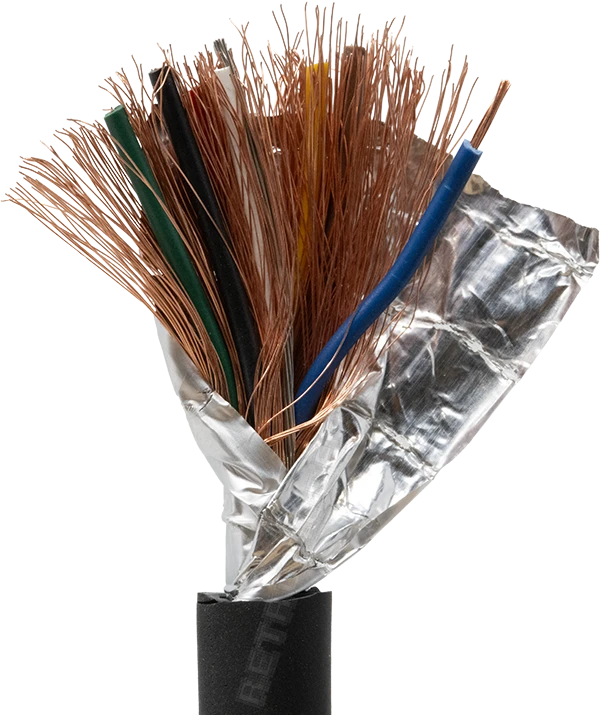
Engineered to exceed industry standards, Fortraflex features thicker and denser shielding, durability, and signal quality compared to typical cables available through other suppliers. Each signal line is 100% individually shielded with robust copper wrap to significantly reduce crosstalk and prevent artifacts, delivering clear and accurate audio-visual quality.
The soft outer jacket, commonly found in stage mic cables and official wired game controllers, ensures excellent flexibility for ease of cable management.
75 ohm “Mini-Coax” Coaxial Pro
Coaxial cables with 75 ohm impedance are the standard specified for studio and broadcast industry applications.
Our line of miniature coaxial (“mini-coax”) cables are a ultra-high performance implementation of this benchmark professional grade cable. It features 6 coaxial lines (Red, Green, Blue, Sync, Left and Right Audio) and is made exclusively for Retro Access. Mini-coax delivers exceptional analog video fidelity, especially observable for lengths beyond 6 feet (1.8 m).
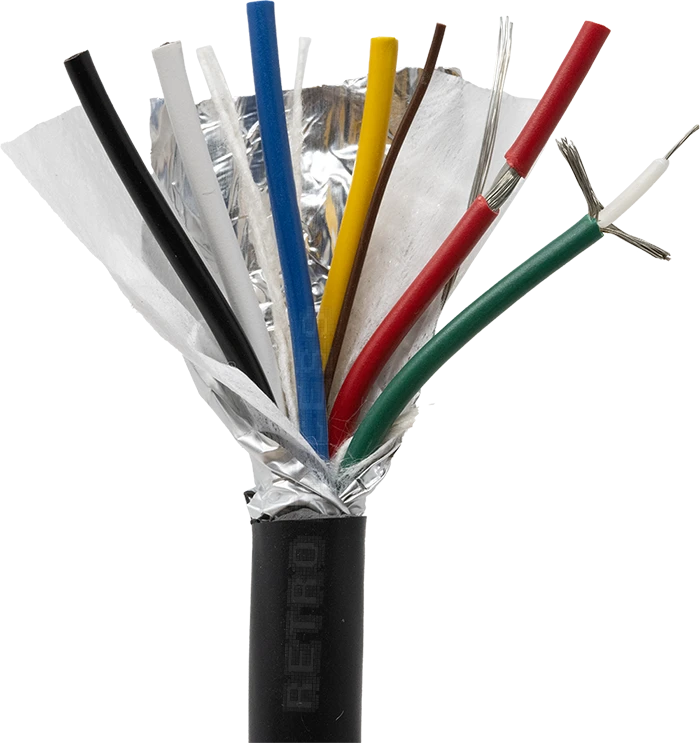
Engineered to meet stringent studio and broadcast video standards it is rated for a true 75 ohm impedance on every line, maintaining a matched impedance down the entire chain from your gaming console, to your scaler or display. True 75 ohm cables eliminate problematic signal reflections and ringing which can degrade the signal, resulting in ghosting or color degradation.

Each line features the same polyethylene (PE) insulation used in the professional video industry selected for its dielectric properties. Others such as typical VGA cables, often use a brightly colored PVC dielectric insulator which cannot maintain the characteristics of true 75 ohm coax.
Mini-Coax is fully individually shielded with copper wrap, not just thin single layer foil, to virtually eliminate crosstalk interference, and includes proper isolated grounds within color-coded PVC sheaths.
A second global coverage outer foil shield rejects noise from the external environment.
75 ohm mini-coax is the pinnacle cable solution for analog RGB video, built for the discerning enthusiast with professional equipment such as PVM or BVM monitors, or high-end scalers such as the OSSC Pro or RetroTINK-4K.
This is analog RGB video without compromise.
Standard Cables by Others
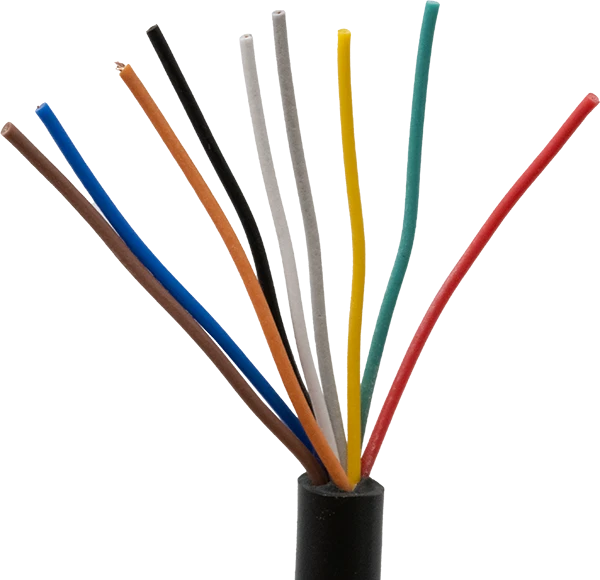
Many of the cheap cables flooding online marketplaces contain no shielding whatsoever, not even a thin foil layer, leaving them wide open to crosstalk, signal coupling, and interference from nearby devices. The result? Jailbars crawling across your video, smudgy colors, buzzing in the audio, and a muddy signal that tarnishes the retro gaming experience. Without proper shielding and signal isolation, even short cable runs can quickly degrade the picture quality on CRTs or scalers.
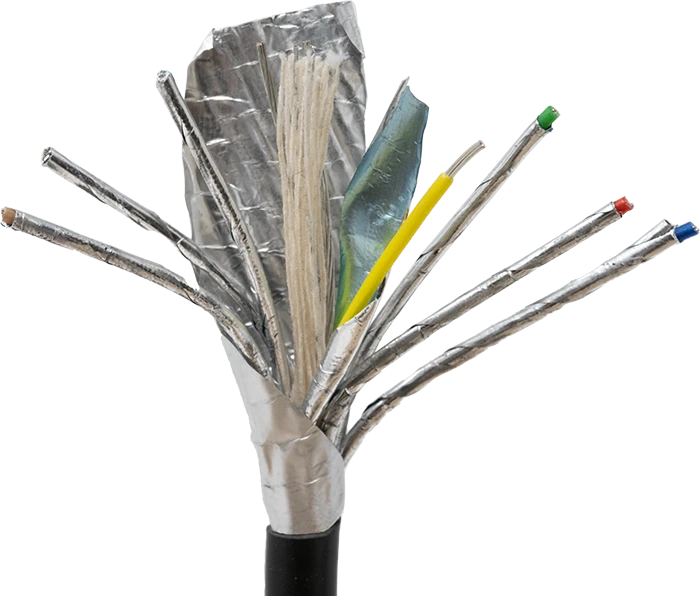
Cables from some other suppliers represent a noticeable upgrade over the unshielded offerings common on mass-market platforms. For many users with consumer-grade CRTs these cables may deliver an adequate experience.
However, they typically rely on thin foil shielding and non-coaxial construction. While this can work in basic setups, it often falls short in tackling interference issues such as jailbars, dot crawl artifacts, audio buzz, or other visual noise, especially in longer cable runs or more demanding upscaled 4K displays.
Because these cables aren’t built around impedance controlled 75 ohm video paths, signal reflections can occur, degrading the image and reducing clarity. For collectors seeking the cleanest, most faithful output, higher-spec construction makes a real, visible difference.
Conclusion
It is recommended to avoid the unshielded cables flooding mass-market platforms. They are highly susceptible to significant picture quality degradation leading to a disappointing experience.
Basic shielded cables offered by some others are often a large step up from the cheap cables found on mass-market platforms, and for basic consumer grade CRT may work fine depending on your equipment, use case and eye for picture quality flaws. However, they can be susceptible to picture quality issues due to foil shielding which does not provide sufficient protection against signal coupling, audio buzz and outside interference.
Fortraflex offers premium picture quality that rivals and often exceeds the original OEM (genuine console brand) cables. It is the ideal candidate for prosumer gear and shorter runs of up to 6 ft. The results produced by Fortraflex are often indistinguishable to our eyes and ears compared to Mini-Coax.
75 ohm rated Mini-Coax is the ultra high performance solution trusted by broadcast studio professionals. It provides the best possible protection against ringing, signal degradation, signal coupling, audio buzz and outside interference. For those seeking the ultimate picture quality for longer cumulative distances or for professional-grade gear, such as PVM, BVM or 4K scaling devices, the results with Mini-Coax are simply unmatched by other cable types.